
Latest News
PreventEd now proudly offering free workshops for Parents and Caregivers of children ages 0-6 years
Helping young children grow up feeling safe, respected and supported starts with the small everyday conversations we have with them.
PreventEd is offering free Safer Futures, Together workshops for parents and caregivers of children aged 0–6, providing practical knowledge and guidance to help families build the foundations for safer futures.
The early years are an important time for children to develop their understanding of relationships, boundaries and how to communicate their feelings. As parents and caregivers, we play a key role in helping children feel safe, understand respect and know that their voices matter.
But knowing how to approach these conversations isn't always easy. Many parents and caregivers have questions about what is appropriate at different ages, how to respond when children ask questions about their bodies, and how to introduce ideas about personal safety in ways that feel natural and age-appropriate.
The Safer Futures, Together workshops are designed to help make these conversations easier.
Small everyday actions can make a difference
Delivered by PreventEd's trained facilitators, the workshops provide practical, accessible information to help parents and caregivers support children's safety and wellbeing from an early age.
Participants will gain valuable knowledge about how to:
- Support children to understand respect, boundaries and personal safety.
- Answer children's questions in age-appropriate ways.
- Encourage open communication and help children feel comfortable sharing their thoughts and feelings.
- Recognise the importance of everyday interactions in building children's understanding of safety and respectful relationships.
The workshops offer an opportunity to explore these topics in a supportive environment, ask questions and consider practical ways to apply what you've learned at home.
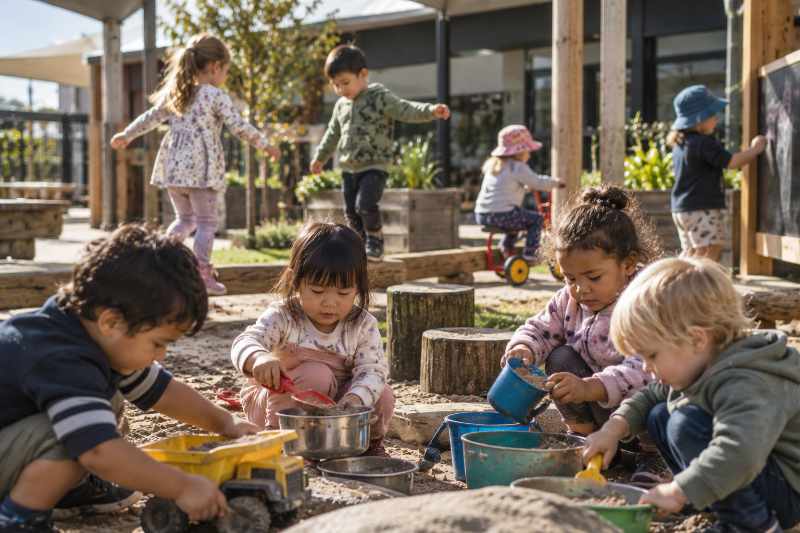
Working together to create safer futures
At PreventEd, we believe preventing sexual harm starts with education, connection and a shared commitment to creating safe environments for children. When the adults around children have the knowledge and confidence to talk about safety, respect and boundaries, they can help build strong foundations that support children as they grow.
Early learning centres and kindergartens are important partners in this work. By bringing these workshops into early childhood communities, we can help connect families with useful information and encourage positive conversations between parents, caregivers and children.
Bring a free workshop to your early learning community
PreventEd invites early learning centres, kindergartens and community groups to express their interest in hosting a free Safer Futures, Togetherworkshop for the parents and caregivers in their community.
If your centre or group would like to learn more about the workshops or discuss arranging a session for your families, we'd love to hear from you.
Get in touch with PreventEd at info@prevented.org.nz to find out more.
Together, we can take small, meaningful steps towards safer futures for our tamariki.
This blog draws together the key lessons emerging from the community mobilisation conversations at the TOAHNNEST Sexual Violence Conference held in August 2026 It reflects what participants learned when people from different sectors, communities, cultures and lived experiences took time to connect, listen and build relationships.
What We Learn When We Slow Down and Connect
"Nāu te rourou, nāku te rourou, ka ora ai te iwi."
With your food basket and my food basket, the people will thrive.
This whakataukī beautifully captures one of the strongest messages to emerge from the Sexual
Violence community mobilsation workshop. When people come together, share their experiences, listen deeply, and contribute their knowledge, relationships, and strengths, we create the conditions for meaningful and lasting change.
In a sector that is often characterised by urgency, crisis, demand and limited resources, it can be
easy to overlook the value of simply coming together. Yet one of the strongest themes to emerge from the Sexual Violence community mobilisation Workshop was that some of the most important learning happened not through presentations or formal training, but through
conversation, connection and relationship-building.
When people from across Aotearoa gathered to explore community mobilisation and sexual violence prevention, they discovered something powerful: while our communities, services and approaches may look different, many of us are asking the same questions, facing similar challenges and working towards the same vision.
One of the clearest lessons was that prevention cannot sit within the sexual violence sector alone. Participants recognised that communities already hold enormous strengths, wisdom, mātauranga and influence. Prevention is happening in whānau, schools, barbershops, sports clubs, music venues, marae, disability communities, youth spaces and cultural networks.
The challenge is not creating entirely new solutions but recognising, supporting and connecting the people already doing this work. The conversations also highlighted the importance of authentic relationships. Discussions about hapū, iwi and whānau-led initiatives reminded participants that meaningful change does not happen through one-off engagement or consultation.
Trust takes time. Many reflected that organisations often need communities more than communities need organisations. Genuine partnership begins with listening, showing up consistently and respecting the knowledge that already exists within communities.
Another powerful insight was the extent to which sexual violence intersects with other forms of harm. Conversations exploring the overlap between family violence and sexual violence revealed how survivors often experience multiple forms of violence, yet systems and services remain separated.
Participants reflected on the need to move beyond silos, increase collaboration and focus on the common drivers that underpin violence in all its forms.
What surprised many participants was the amount of untapped leadership that exists outside traditional prevention settings. Barbers described supporting men through difficult conversations. Artists spoke about creating spaces where people can express experiences that may never be spoken aloud. Community leaders discussed how trusted relationships often create opportunities for healing, accountability, and change.
These stories reminded participants that prevention can
happen in unexpected places and through unexpected people. The conversations also reinforced the importance of inclusion. Participants reflected on the need to better engage disabled people, culturally diverse communities, young people, and those
whose experiences are often invisible within mainstream prevention efforts.
Accessibility was not viewed as an additional consideration but as a fundamental part of effective community mobilisation. Prevention cannot succeed if some communities remain excluded from the
conversation.
Perhaps the most hopeful lesson was that people want to be part of the solution. Participants noted that when prevention is framed in ways that align with community values and when people understand how they can contribute, they feel a genuine sense of agency. Whether supporting a young person, challenging harmful attitudes, creating safer spaces, or sharing resources with whānau, people are eager to play a role.
Ultimately, the workshop reminded us that community mobilisation is not primarily about programmes, campaigns or projects. It is about relationships. It is about creating spaces where people can learn from one another, share knowledge, build trust and discover common purpose.
When we take time to connect, we often realise that the solutions we are seeking already exist within our communities. Our role is to nurture those connections, amplify community strengths and work collectively towards a future free from sexual violence.